ADHD and Relationships: The Problems Are Rarely What They Look Like
You were late again. They are upset, and not really about the twenty minutes.
They are upset because being late looks like a statement: that they were not worth being on time for.
That reading is wrong. It is also completely reasonable from where they are standing. Most ADHD relationship friction lives in that gap.
Written by people who build a time tracker, not therapists. About the mechanism, not relationship advice.
The translation problem
A short list of what these behaviours look like from outside, versus what is happening inside.
| What they see | What is happening |
|---|---|
| Late again | Cannot track an interval from inside it |
| Not listening | Working memory dropped it |
| Doesn't care about the plan | The plan was not visible until it was near |
| Ignoring me | Attention will not detach |
| Overreacting | Emotional regulation, not drama |
| Lazy about chores | Task initiation, not preference |
Every left-hand item is a reasonable inference. Every one is wrong.
And here is the difficult part: you cannot argue your way out of the left column. From outside, the evidence looks consistent and damning. "It's my ADHD" sounds like an excuse precisely because it arrives after the fact, every time.
The two that do most damage
Lateness, because it is public and repeated. It is the one that accumulates, and it is read as a running commentary on how much you value someone. Worth reading why leaving early does not fix it, and worth sharing.
Attention that will not detach. Being spoken to during hyperfocus and not registering it is experienced by the other person as being deliberately ignored. This one hurts disproportionately because it looks like a choice.
What helps, for the person with ADHD
Explain the mechanism once, in calm conditions. Not during an argument, where it lands as an excuse. Explaining that you cannot track an interval from inside it is very different from saying you have ADHD.
Apologise for the impact, not the diagnosis. "I know that felt like I didn't prioritise you, and I'm sorry" works. "I have ADHD" does not, because it answers a question they did not ask.
Externalise, visibly. Shared calendars, written agreements, alarms. This does two things: it helps, and it demonstrates effort, which is often what the other person actually needs to see.
Fix the recurring ones structurally. If you are late to the same thing every week, change the arrangement rather than trying harder at it.
Do not over-explain. The mechanism is context, not a defence. Deliver it once and then let the changed behaviour do the work.
What helps, for the partner
Separate impact from intent. The impact is real and you are allowed to be upset. The intent almost certainly was not what it looked like. Both are true.
Ask for specific changes, not general effort. "Text me if you'll be more than ten minutes late" is actionable. "Care more about my time" is not.
Do not become the manager. Reminding, planning and tracking on someone else's behalf breeds resentment on both sides and turns a partnership into a hierarchy. External systems should be shared, not a job you take on.
Believe the mechanism. The single most useful thing you can offer is accepting that this is a difference in how time and attention work, rather than a measure of how much you are valued.
The evidence problem
Something worth naming, because it makes these conversations circular.
Neither person has an accurate record of what happened. Not out of dishonesty — self-assessment of time is unreliable for everyone. In a 2025 randomised trial, experienced developers estimated AI tools made them 20% faster on real work. They were 19% slower, a gap of about forty percentage points on work they had just finished.
So "you're always late" and "I'm not always late" are both sincere, and neither is checkable. The argument cannot resolve because there is no shared fact.
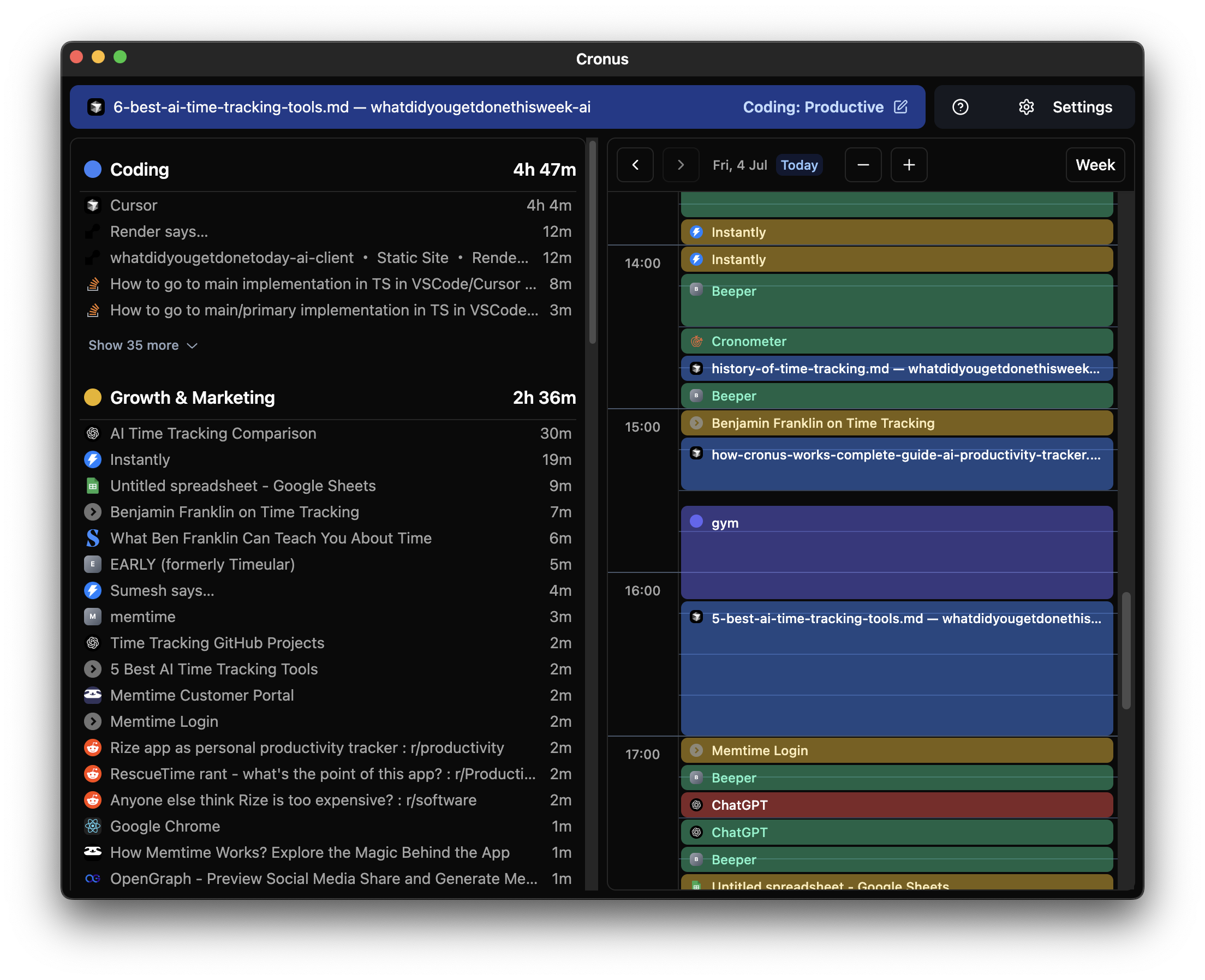
This is the narrow place a tracker helps. Cronus records where your time actually goes, automatically, so "I don't know, I was getting ready" becomes something specific. Often the honest answer is smaller and stranger than either person assumed: eleven minutes vanished into a single tab, not a general lack of care.
A caution. Do not use this as ammunition. Bringing data to an argument to prove someone wrong is not what it is for, and it will go badly. It is useful for you, to find and fix the recurring pattern. Not as evidence in a dispute.
The thing worth remembering
Most of this friction is a translation error, not a values conflict. One person is reading behaviour as a signal about the relationship. The other is experiencing a mechanism that has nothing to do with the relationship at all.
Naming the mechanism once, then changing the structure so the behaviour happens less, does more than any amount of explaining after the fact.
Read next
- Why Am I Always Late? — the single biggest source of this friction.
- ADHD Hyperfocus — why being spoken to sometimes does not register.
- Rejection Sensitive Dysphoria — why the conversation about it can be so hard to have.
Find out where your week actually goes
The 5-day time audit: one short email a day, walking you through the experiments in this post. You will end the week with a real answer instead of an impression. Free, no app required, and it ends after five days.